Infrastructure and City: How Large-Scale Projects Are Redefining Panama

Óscar Díaz Díaz
In Panama, the relationship between infrastructure and the city has always been direct. However, in the current context, this relationship is taking on a new scale and complexity. Large-scale infrastructure projects are not only improving connectivity or logistical capacity, but also redefining how the city expands, where activity concentrates, and what type of architecture makes sense to develop.
Understanding this transformation is key to making informed decisions in the design and development of new projects.
Infrastructure as the invisible structure of the city
Cities do not grow randomly. Their evolution is deeply shaped by the infrastructure that supports them: transportation, logistics, energy, and connectivity.
When these systems change, the city changes with them. New connections generate new flows, and those flows attract activity, investment, and real estate development.
In Panama, projects such as new transport systems, logistics developments, and strategic expansions are redefining this invisible structure that organizes the territory.
How to approach it:
- Analyze the flows generated by each infrastructure
- Understand how these flows impact land use
- Anticipate where activity will concentrate in the future
New centralities beyond the traditional core
One of the clearest effects of large-scale infrastructure is the emergence of new urban centralities.
The city moves away from relying on a single core and begins to organize itself around multiple activity nodes connected to each other. This shifts the logic of real estate development and creates opportunities in areas that were not previously considered strategic.
For developers and companies, this means rethinking where it makes sense to locate.
How to approach it:
- Identify areas with growth potential linked to infrastructure
- Evaluate development in the medium and long term, not just current conditions
- Understand the city as a network rather than a single point
Mobility as a driver of value
Accessibility becomes one of the main drivers of value in a project.
Infrastructure such as mass transit systems not only reduces travel time, but also transforms how distance is perceived within the city. Areas that were once considered peripheral become integrated into broader urban dynamics.
This has a direct impact on land value, project feasibility, and the type of development that can be implemented.
How to approach it:
- Prioritize locations with strong current or future connectivity
- Understand mobility as part of the project’s design strategy
- Design with movement and access in mind
The scale of projects and their impact on the environment
Large infrastructure projects operate at a scale that goes beyond the individual building. Their impact is territorial rather than localized.
This means that any architectural project must be understood in relation to this broader context.
A building does not function in isolation. Its performance depends on how it integrates into the dynamics generated by these infrastructures.
How to approach it:
- Analyze the project within its extended context
- Understand how infrastructure influences space usage
- Design with a perspective that goes beyond the site itself
Opportunity and risk in transforming contexts
Moments of transformation generate opportunities, but also uncertainty.
Developing in areas undergoing change can offer competitive advantages, but it also involves risks if the direction of growth is not properly understood.
The key is to interpret contextual signals and make decisions based on information rather than assumptions.
How to approach it:
- Evaluate the maturity of the surrounding area before investing
- Analyze real trends, not just projections
- Design projects that can adapt to different scenarios
Architecture aligned with the logic of the city
When architecture is developed without considering urban dynamics, it loses its ability to generate value.
On the other hand, projects that understand their relationship with infrastructure and urban flows are more likely to perform successfully over time.
This requires designing not only for a specific user or function, but for a broader context that shapes how space is used and perceived.
How to approach it:
- Integrate urban analysis into the design process
- Align the project with city dynamics
- Understand architecture as part of a larger system
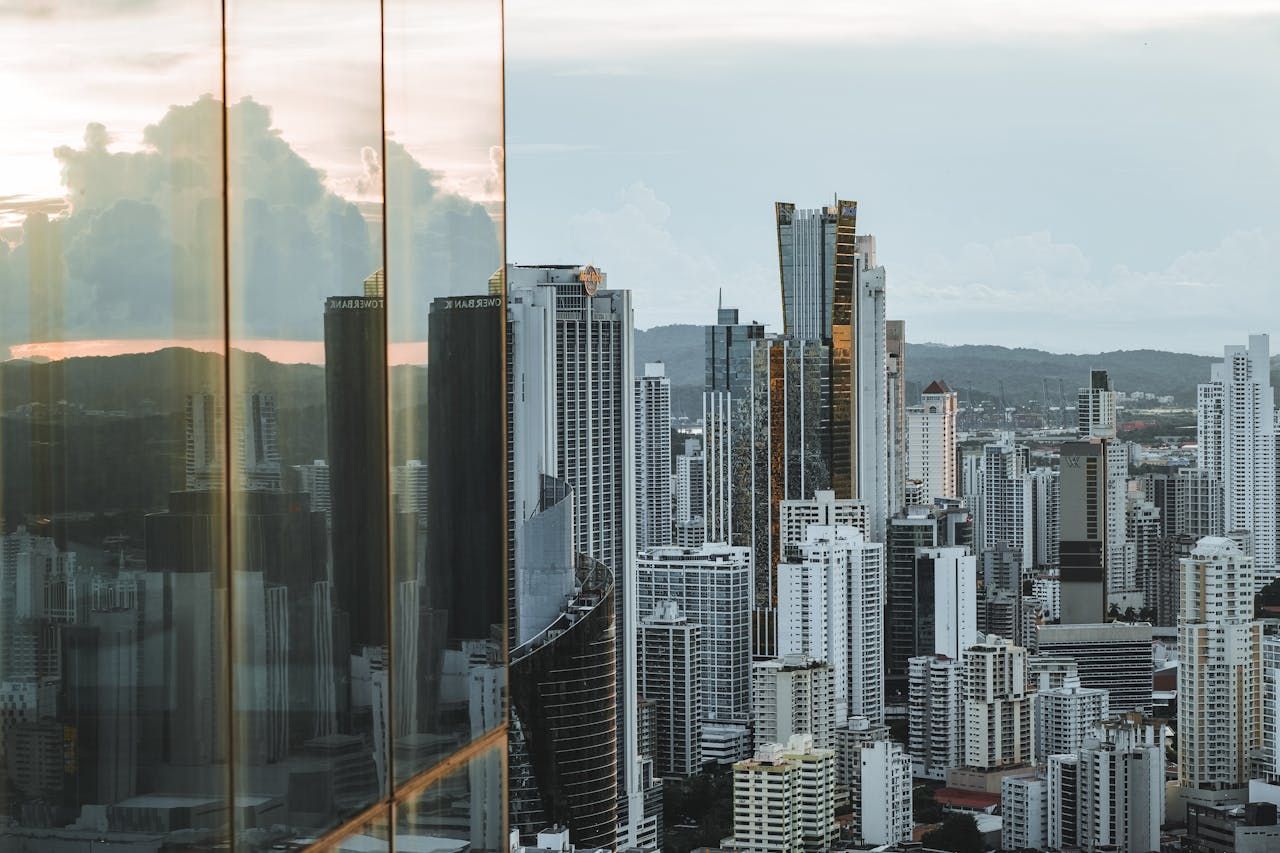
Panama as a city in transformation
Panama is currently in a phase where infrastructure is redefining its urban structure.
These conditions do not only change where development happens, but also how projects should be designed. Architecture becomes a tool to interpret and respond to these transformations.
When this relationship is understood, projects move beyond isolated responses and become coherent pieces within the evolution of the city.
Related News