Contemporary Architecture in Historic Contexts: Challenges and Opportunities in Panama

Óscar Díaz Díaz
Urban growth and the need for renewal are realities in cities around the world. Within this process, one of the greatest challenges for contemporary architecture is how to intervene in historic contexts without erasing their identity.
In Panama, this debate is particularly relevant. The country brings together historic centers, consolidated urban fabrics, and new economic dynamics that demand updating, densification, and new uses. The question is not whether intervention should occur, but how to do so in a responsible, coherent, and strategic way.
“Building in a historic context does not mean looking backward, but engaging in dialogue with the past.”
The Balance Between Preservation and Evolution
Historic environments are not museum pieces. They are living, inhabited spaces in constant transformation. However, intervening in them requires a higher level of sensitivity than in newly developed areas.
Contemporary architecture in historic contexts faces a constant tension between two forces:
- The need to preserve the cultural, urban, and symbolic value of the environment.
- The demand for functional spaces adapted to current standards of comfort, technology, and regulation.
When this balance is lost, two opposite risks emerge: the literal reproduction of the past, which freezes the city, or the imposition of an alien language that dilutes its identity.
Key Challenges of Contemporary Architecture in Historic Contexts
Urban Scale and Proportion
One of the main challenges is respecting the existing scale. Historic urban fabrics are often defined by specific heights, rhythms, and proportions. A contemporary building that ignores these factors can create visual and functional disruptions that are difficult to reverse.
Architectural Language
The challenge is not to imitate historic styles, but to propose an architectural language that is contemporary yet compatible with its surroundings. This requires working with abstraction, restraint, and formal clarity, avoiding both artificial nostalgia and forced contrast.
###Regulations and Heritage Protection Historic contexts are often governed by strict legal frameworks. These regulations, essential for preservation, demand that architectural proposals be especially rigorous and well-founded.
Social and Cultural Expectations
Interventions in historic areas are subject to a high level of public scrutiny. Architecture is evaluated not only for its technical quality, but also for how it is perceived by the community, which often feels a strong symbolic connection to the place. This same principle applies in the corporate realm, where architecture aligned with business strategy can directly influence how an organization functions and evolves.
Opportunities Offered by Contemporary Architecture
Far from being a limitation, historic contexts can become high-value settings for contemporary architecture when approached with clear criteria.
Functional Updating Without Loss of Identity
Contemporary architecture makes it possible to introduce new uses, improved environmental conditions, and updated technical infrastructure without erasing the character of the place, but rather reinforcing it.
Urban and Economic Revaluation
A well-designed intervention can:
- Reactivate degraded historic areas.
- Increase the surrounding property value.
- Attract high-quality cultural, commercial, and tourism activity.
In this context, architectural design can become a tool to increase real estate value without increasing investment, as long as decisions are driven by functionality, adaptability, and a strategic reading of the urban environment.
Dialogue Between Past and Present
When contemporary design is approached with respect and contextual understanding, the result is often a more restrained, precise, and enduring architecture. Controlled contrast, rather than being a problem, can highlight existing structures and make the history of a place more legible.
“Good contemporary architecture does not compete with heritage; it makes it more visible.”
The Panamanian Context: A Strategic Opportunity
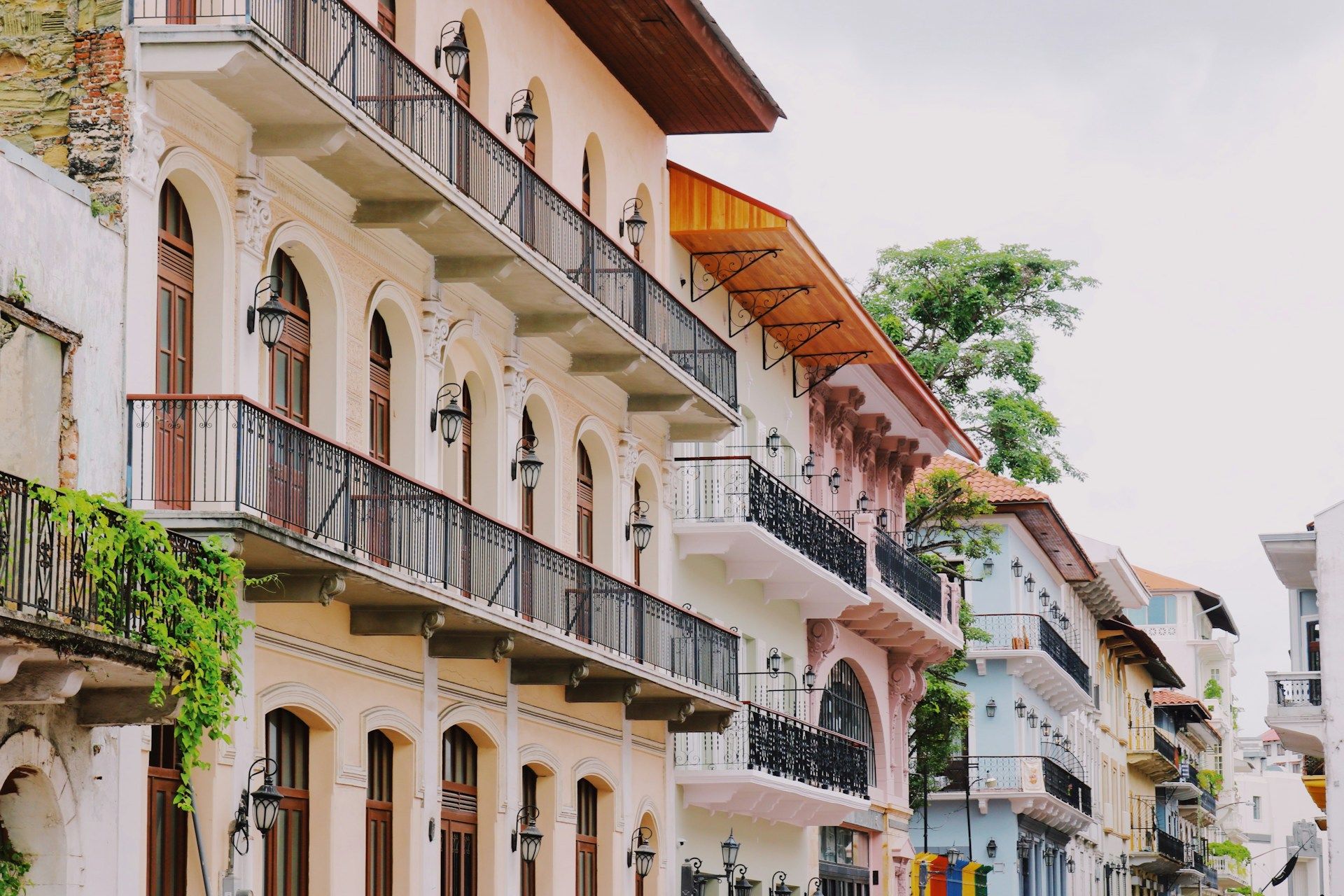
Panama offers a diverse range of historic urban environments, each presenting different challenges, from colonial centers to twentieth-century neighborhoods with architectural and social value.
In these contexts, contemporary architecture can play a key role when grounded in principles such as resilience, sensitivity to the urban environment, a deep reading of place, and a long-term vision.
Rather than imposing an image, the goal should be to build continuity, allowing the city to evolve without losing its memory.
Contemporary Architecture as a Tool for Urban Continuity
Intervening in historic contexts is not about replicating the past or creating a radical break. It is about adding a new layer to the urban narrative, coherent with what already exists and honest to its time.
When contemporary architecture is rooted in contextual understanding, it can:
- Extend the life of historic areas.
- Introduce new meanings and uses.
- Reinforce urban identity rather than dilute it.
In a country like Panama, where cities continue to transform rapidly, this approach represents a strategic opportunity to grow with discernment, memory, and a forward-looking vision.
“Architecture that endures is not the one that imitates the past, but the one that knows how to engage in dialogue with it.”
Related News