Urban Regeneration in Panama: The Role of Architecture in Consolidated Neighborhoods

Óscar Díaz Díaz
Cities do not evolve only through new developments. Much of their transformation happens within existing urban fabrics, in consolidated neighborhoods that concentrate history, daily life, and infrastructure. In this context, urban regeneration has become one of the most significant contemporary challenges for architecture.
In Panama, where urban growth has been intense and accelerated, the question is not only how to expand, but how to renew what already exists without losing identity, functionality, or social value. Architecture plays a key role in this process.
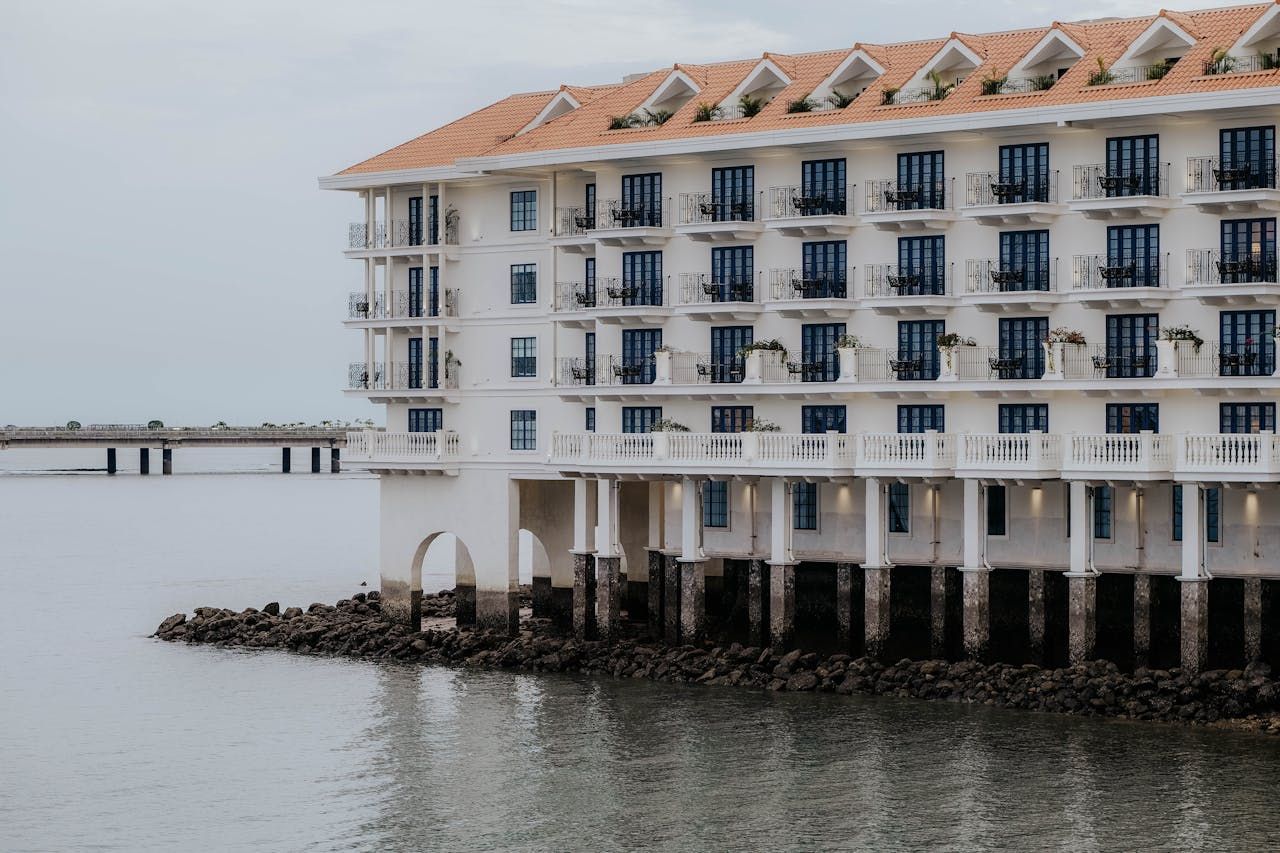
What Do We Mean by Urban Regeneration?
Urban regeneration goes beyond the physical rehabilitation of buildings. It involves a comprehensive vision that integrates space, use, community, and economy. It is not simply about improving façades or upgrading infrastructure, but about reactivating neighborhoods through social, functional, and urban strategies.
In consolidated areas, regeneration typically aims to:
- Update obsolete buildings without erasing their character.
- Introduce new uses that are compatible with existing life.
- Improve public space and the relationship between buildings and the city.
- Enhance the quality of life for current residents.
Architecture acts as a mediator between past and future, avoiding unnecessary rupture and promoting urban continuity.
Consolidated Neighborhoods as Urban Assets
Consolidated neighborhoods are not “exhausted” areas. On the contrary, they often possess advantages that new developments lack: strategic locations, established social networks, recognizable identity, and access to services.
The challenge lies in reinterpreting these neighborhoods in light of contemporary needs:
- Demographic changes.
- New work and mobility dynamics.
- Demand for mixed-use and flexible spaces.
- Higher expectations of comfort and sustainability.
A well-conceived architectural intervention can strengthen these assets and prevent processes of deterioration or abandonment.
The Role of Architecture in Urban Transformation
Architecture should not impose an image that is foreign to its surroundings. In regeneration processes, its role is to interpret the place, understand its historical, social, and spatial layers, and propose solutions that engage with that reality.
This requires working with:
- Scale and proportion appropriate to the existing fabric.
- Contemporary architectural languages that respect context.
- Programs that respond to real neighborhood needs.
- Strategies that prioritize use and habitability over formal gestures.
When design focuses solely on image, projects risk becoming disconnected. When it focuses on context, architecture becomes a tool for integration.
Urban Regeneration and Long-Term Value
One of architecture’s most important contributions in consolidated neighborhoods is the creation of sustainable, long-term value, not only economic but also social and urban.
A well-designed intervention can:
- Reactivate degraded areas without displacing the community.
- Increase property value progressively and sustainably.
- Attract new uses without disrupting existing dynamics.
- Improve the neighborhood’s perception at the city scale.
In this sense, urban regeneration should not be understood as a quick operation, but as a long-term investment based on coherence and vision.
The Panamanian Context: Specific Challenges
Panama presents particular conditions that make urban regeneration especially relevant:
- Strong contrasts between high-growth areas and consolidated neighborhoods.
- Infrastructure in need of updating.
- A tropical climate that demands passive and efficient solutions.
- A diverse urban identity shaped by multiple historical layers.
Architecture has the responsibility to respond to these challenges with proposals that do not replicate external models, but instead emerge from local realities and neighborhood-specific dynamics.
Architecture as a Tool for Urban Continuity
Regeneration does not mean replacement. It means continuity, allowing the city to evolve without erasing what makes it recognizable. When practiced with intention, architecture can add new layers to the urban fabric without breaking it.
In consolidated neighborhoods, every project has an impact beyond its site. Design must therefore be understood as an urban action, not merely an architectural one.
Panama has a clear opportunity to pursue conscious urban regeneration, where architecture strengthens the existing city, improves daily life, and contributes to a more balanced urban future.
Related News