Real Estate Development in Panama: Key Decisions Before Building

Óscar Díaz Díaz
Key Considerations Before Launching a Real Estate Development Project in Panama: Updated for 2026
If you’re preparing a real estate development in Panama in 2026—whether offices, hospitality, retail, mixed-use, or build-to-suit—your first decisions will determine 80% of outcomes: cost, delivery time, and operating performance. This guide prioritizes what to validate before you commit, how to structure design and construction for fewer surprises, and where Panama-specific issues impact permits, utilities, and procurement.
For owners who want an architecture-led partner that stays with the project through construction, explore working with DIAZ DIAZ, active across architecture, interior design, and design-build for commercial spaces.
What Should You Validate Before Committing to Design?
A strong concept won’t rescue a weak site. Complete these checks before you issue a single detailed drawing:
- Title and boundaries: Confirm title at the Registro Público and cadastral alignment via ANATI where applicable. Flag easements, rights of way, and any maritime or river setbacks for waterfront lots.
- Zoning and use: Validate land-use and density with the municipality’s planning office (Planes de Ordenamiento Territorial) or MIVIOT, depending on jurisdiction. Check height limits, floor area ratios, parking requirements, and mixed-use allowances.
- Environmental and flood exposure: Request available flood maps and drainage constraints; many Panamanian sites require hydraulic studies due to heavy rainfall. If the use triggers an Environmental Impact Assessment (EIA), map the scope early with MiAmbiente.
- Utilities capacity and points of connection: Confirm potable water and sewer capacity with IDAAN or local utility, electricity with the relevant distribution company, and telecom routes. Capacity letters and preliminary load studies help avoid redesign later.
- Access and logistics: Validate truck access, turning radii, and construction staging—crucial in dense Panama City corridors and historic or coastal areas.
Decision rule: if any of the above are uncertain, hold off on hard commitments (lease preconditions, sales launch, or design finalization). Create a focused pre-development package instead.
How Should You Define the Product Before Building?
Panama’s corporate and mixed-use markets remain schedule- and cost-sensitive. Product mistakes are expensive to unwind. Anchor decisions in measurable demand and lifecycle costs:
- Target user and ticket size: Office floorplates that fit modern densities, clear heights, and efficient cores; retail with correct frontages and loading; hospitality room mix aligned to corridor demand; logistics clear height and dock ratios for throughput.
- Amenity and parking strategy: Balance code-minimum parking with real user behavior and transit options. Overbuilding parking escalates capex without guaranteed rent uplift.
- Resilience and maintainability: Tropical rainfall and heat mean façade performance, waterproofing, and drainage details pay back in reduced OPEX and fewer downtime events. Prioritize easy-to-service MEP layouts.
- Flexibility: Structure and MEP grids that enable multiple tenant layouts prevent long vacancy periods between fit-outs.
Common error: designing to a buyer brochure rather than a leasing plan. Demand data from brokers and corporate occupiers should inform unit mix, core-to-lease ratios, and fit-out standards.
How Should You Plan Permits and Approvals in Panama?
Approval bodies and steps vary by municipality and project type. Typical checkpoints include:
- Land and planning compliance: Municipal planning review for land use, density, height, and setbacks.
- Environmental: Scope any EIA requirements with MiAmbiente early. Even when a full EIA isn’t needed, drainage, tree management, and erosion controls can impact design.
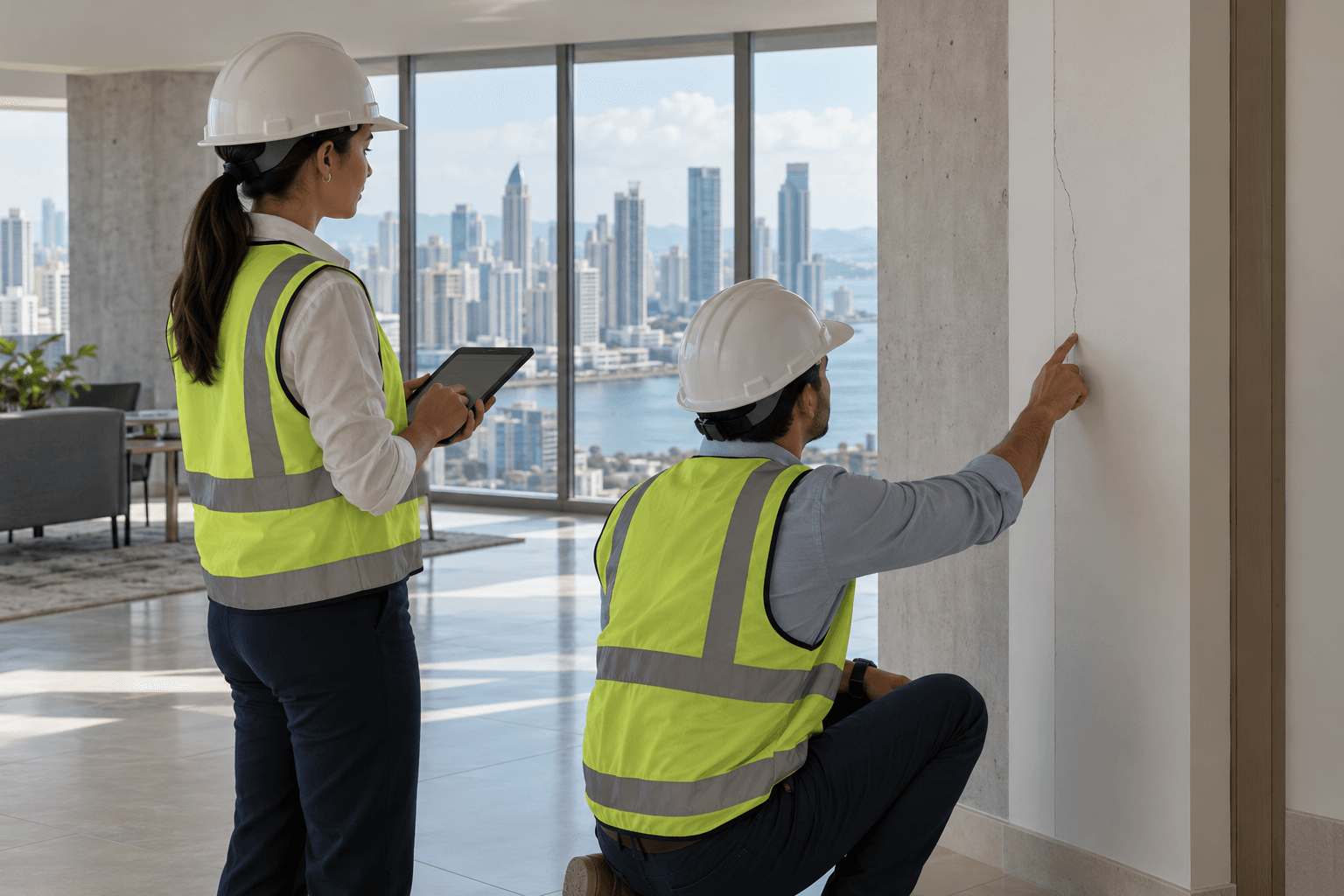
- Fire and life safety: Coordinate with the Benemérito Cuerpo de Bomberos for fire protection, access, hydrants, and egress provisions.
- Health and sanitation: Sanitary system approvals and grease trap requirements where applicable; water and sewer connections with IDAAN or the relevant utility.
- Structural review and building permit: Final stamped drawings typically across architecture, structural, and MEP disciplines before construction authorization.
Practical tips:
- Sequence matters: Some municipalities allow parallel reviews; others are strictly sequential. Ask early which items gate the building permit.
- Expect hybrid processes: Digital portals are expanding, but in-person validations and original stamps are still common. Budget time for both.
- Coordinate shop drawings: If you intend to fast-track, agree with the municipality on what can be deferred to shop drawings without triggering re-review.
How Do You Build a Panama-Specific Cost Model?
Your pro forma should reflect how projects in Panama actually buy, ship, and build:
- Major cost drivers: Structure and foundations (especially near coastal or reclaimed areas), MEP systems, façade, and vertical transportation typically dominate spend.
- Local vs. imported: Many finishes and systems are imported. Include lead-time risk and logistics allowances even if tariffs are benign.
- Indirects and permits: Plan for permitting fees, utility contributions, inspections, testing, temporary works, and site logistics.
- Contingency and escalation: Keep design contingency until drawings are coordinated; carry construction contingency appropriate to delivery model. Escalation should follow current supplier guidance rather than generic indices.
- Currency: Panama operates on the U.S. dollar, which simplifies FX exposure. However, imported equipment priced in other currencies can still fluctuate—confirm supplier quotation validity windows.
Recommended structure: hard costs by discipline, general conditions, GC fee, design and consultants, permits/fees, testing/commissioning, insurance and bonds, contingency, escalation, financing, and marketing/sales where relevant.
How Should Schedule and Procurement Shape the Critical Path?
Rain patterns, permit pacing, and long-lead items shape delivery:
- Weather: Earthworks and façades are sensitive to the rainy season; plan sequences and temporary drainage accordingly.
- Long-lead equipment: Elevators, switchgear, generators, air handling units, and fire pumps often set the pace. Release these early with well-defined performance specs.
- Early works packages: If zoning and massing are set, consider early foundations or shoring under a separate permit while the main package is finalized—only if local rules and your risk profile allow.
- Fast-track with discipline: Overlapping design and build compresses time but raises coordination risk. Use robust BIM clash detection, fixed interface points, and clear submittal schedules.
Which Delivery Model Fits Your Risk Profile?
There’s no universal best model—only fit for goals, complexity, and governance.
- Design–Bid–Build (DBB): Competitive pricing at the cost of longer duration and higher interface risk between designer and builder. Works when the design is fully resolved and time-to-market is less critical.
- Construction Management at Risk (CMR): Earlier contractor input, packages bid competitively, and potential for a Guaranteed Maximum Price (GMP). Demands disciplined scope definition to avoid change orders.
- Design–Build (DB): Single point of accountability helps compress schedule and reduce coordination gaps—especially valuable for integrated architecture, interiors, and MEP-heavy programs.
For corporate interiors, hospitality, and mixed-use coreshell with integrated fit-outs, an architecture-led DB approach can de-risk interfaces. If that’s your scenario, discuss it with DIAZ DIAZ to evaluate scope, performance specs, and how to protect quality while locking time and budget.
How Does Technical Coordination Protect Operations?
Code compliance is the baseline. Operations continuity is the differentiator.
- Life safety by design: Egress strategies that survive tenant reconfigurations; smoke control and pressurization coordinated early with the fire authority.
- MEP capacity and zoning: Right-size electrical and cooling with diversified loads and metering that supports multi-tenant recovery of costs.
- Envelope for a tropical climate: Solar control, air and water tightness, and maintainable sealants. Plan façade access for cleaning and repairs to avoid persistent OPEX penalties.
- Acoustics and vibration: Near transit or heavy traffic, set targets early and test assemblies before mass procurement.
- Commissioning and turnover: Define witnessing, training, O&M manuals, and spare parts lists during design, not two weeks before handover.
How Do ESG and Resilience Affect Long-Term Value?
Panama’s climate puts resilience at the center of value preservation:
- Drainage and storm events: Roof and site drainage sized for intense rainfall; safe overflow paths; redundant pumping where gravity discharge is not reliable.
- Heat and humidity: Specify corrosion-resistant materials and maintainable HVAC. Passive shading and high-performance glazing help lower cooling loads.
- Energy and water: Submetering, variable-speed drives, and water reuse where feasible reduce OPEX and appeal to corporate tenants with sustainability policies.
Which Execution Mistakes Should Developers Avoid?
- Buying land without confirming real utility capacity and rights of way.
- Designing to a target sellable area before zoning and egress are validated.
- Underestimating parking and loading requirements in code, then losing NLA to fixes.
- Launching sales or leasing before the permit path is credible, inviting delays and penalties.
- Approving high-variance materials without mock-ups or local installer vetting.
- Treating shop drawings as afterthoughts—leading to serial rework and schedule creep.
What Should You Prepare Before Hiring an Architect or Contractor?
Bring a concise, decision-ready brief. At minimum:
- Land dossier: Title, survey, easements, any prior studies.
- Planning context: Zoning extracts, height/area limits, and nearby precedents.
- Market inputs: Broker letters, comparable rents/sales, parking/utilization data.
- Performance targets: Net area goals, energy or comfort standards, acoustic targets, and maintenance philosophy.
- Budget and schedule guardrails: Capex range, key milestone dates, financing constraints.
- Governance: Who signs off at each stage and how change decisions are made.
If you need a structured pre-development review that translates these inputs into drawings, permits, budget, and schedule, engage a partner like DIAZ DIAZ that can carry accountability from concept through construction.
What Is the Next Step to Reduce Project Risk?
For Panama projects in 2026, owners who front-load feasibility and coordinate design with construction will spend less to achieve more predictable outcomes. If you want an architecture-led team that integrates design, technical coordination, and site execution, start a pre-construction review with DIAZ DIAZ. We will focus on:
- Coordination: early utility and authority alignment to avoid redesign.
- Time: a critical-path schedule with realistic permit and long-lead strategies.
- Budget control: transparent cost model, contingencies, and procurement plan.
- Continuity: a delivery approach that keeps design intent intact through handover.
Frequently Asked Questions
How long do permits typically take in Panama?
Timelines vary by municipality, scope, and whether environmental review is required. Expect several steps that may run in series. The best way to shorten duration is to submit coordinated drawings, secure utility capacity letters early, and agree up front which items can be deferred to shop drawings.
Do I need an Environmental Impact Assessment (EIA)?
It depends on project type, size, and location. Some works proceed with environmental management measures rather than a full EIA. Confirm the applicable pathway with MiAmbiente before finalizing massing and siteworks.
When does design–build make sense in Panama?
DB is effective when time-to-market is critical, the scope benefits from single-point accountability, and you can define clear performance criteria. It is common for corporate interiors, hospitality, and mixed-use packages where MEP and interiors are tightly integrated.
What are typical long-lead items I should order early?
Elevators, electrical switchgear, generators, HVAC equipment, and fire pumps often drive schedule. Prequalify suppliers, lock specifications, and release these packages early once the interfaces are frozen.
How do I protect my budget from change orders?
Freeze the brief, complete multidisciplinary coordination (BIM/clash detection), define allowances where exact selections aren’t final, and maintain a clear approvals process. Package bids with consistent scope and hold-post tender reviews to align inclusions before award.
Related News